
Group Yoga Classes and Social Neuroscience: The Oxytocin and Mirror Neuron Effects That Solo Practice Cannot Replicate

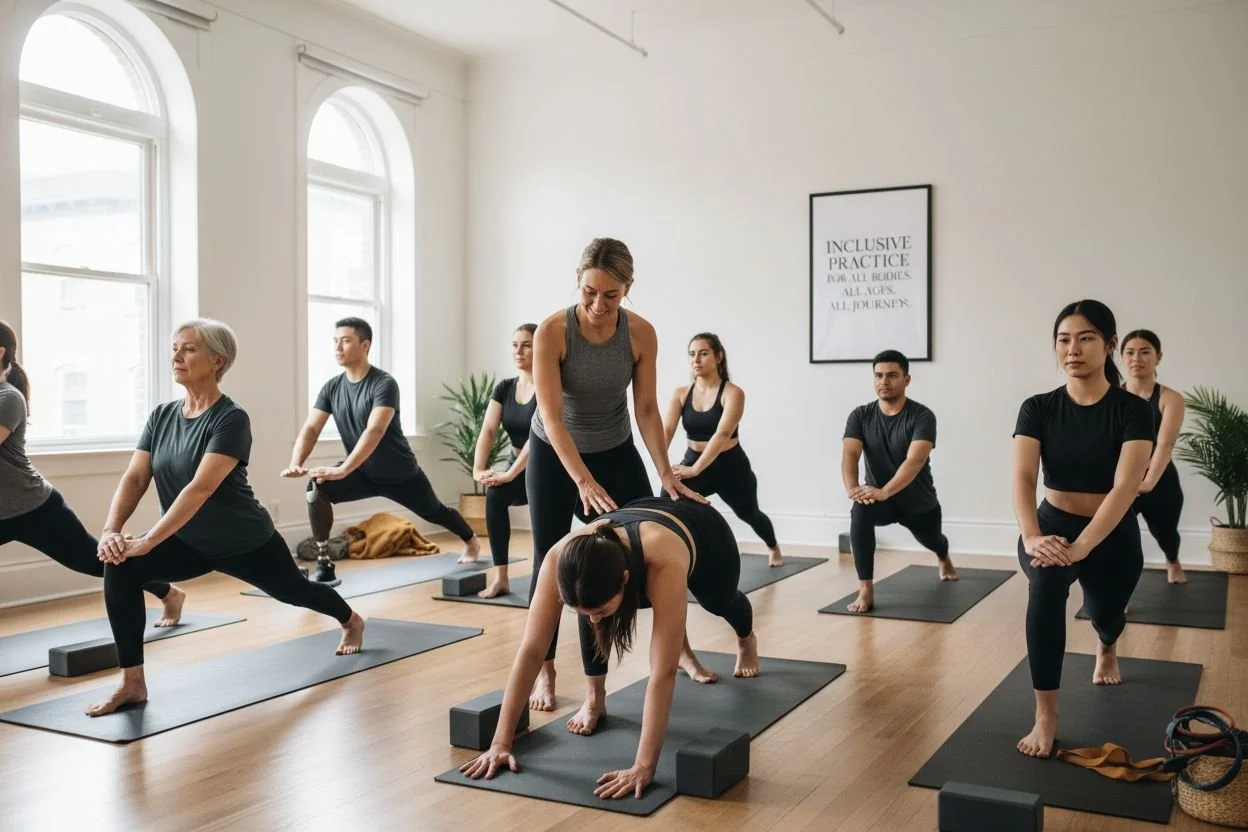
The growth of home yoga practice, accelerated by the widespread adoption of digital streaming platforms and on-demand class libraries, has prompted a reasonable question among practitioners who now have access to high-quality instruction without leaving their homes. If the physical instruction is available at home, what specifically is the value of attending group yoga classes in a studio? The question seems straightforward but the answer draws on some of the most interesting findings in contemporary neuroscience, specifically the science of how the human nervous system responds to shared physical experience in the presence of other people. What group yoga delivers that solo practice cannot replicate is not simply accountability or social motivation. It is a set of neurological processes that fundamentally alter the physiological experience of the practice itself.
Attending yoga classes in a shared studio environment activates neural mechanisms that are simply not available to the practitioner working alone, and these mechanisms contribute to outcomes that range from deeper nervous system regulation to accelerated motor learning to genuine immune system benefits.
Mirror Neurons and the Group Learning Effect
Mirror neurons are a class of neurons, first identified in the primate motor cortex and subsequently confirmed to have analogues in the human brain, that fire both when an individual performs a movement and when that individual observes another performing the same movement. The implications of this dual firing pattern are significant for understanding why learning in a group context produces different outcomes from learning in isolation.
In a yoga class, every practitioner in the room is continuously observing other practitioners moving, adjusting and maintaining postures. The mirror neuron system processes this observation in a way that partially simulates the motor experience of performing the observed movements. This means that a practitioner who watches a more experienced neighbour sustain a balance posture with steadiness and ease is not merely observing a performance. Their motor system is partially rehearsing the neural patterns that produce that steadiness, priming the relevant motor circuits in a way that improves their own subsequent attempts.
This effect is not dependent on deliberate imitation or conscious attention to what other practitioners are doing. It operates continuously and largely below the level of conscious awareness, which means that simply being in a room where other practitioners are moving with skill and intention has a motor learning benefit that accumulates over the duration of the session. The novice practitioner surrounded by experienced ones benefits from this effect enormously. But even experienced practitioners benefit from the mirror neuron activation produced by observing subtler qualities of movement in peers and teachers.
The application of this to motor skill development in yoga is direct. Postures that a practitioner struggles to stabilise in solo practice often improve in group class settings without any change in the practitioner’s deliberate technique, because the mirror neuron system is supplementing their own motor learning with the continuous input of observed skilled performance from those around them.
Oxytocin and the Social Nervous System
Oxytocin, the neuropeptide most widely known for its role in social bonding, trust and affiliative behaviour, is released during positive social interaction and during synchronised physical activity with others. Both of these conditions are present in a well-run yoga class: the social warmth of a community environment and the synchronised movement of breathing, flowing and holding postures together with other practitioners.
The physiological effects of oxytocin release extend well beyond the subjective experience of social warmth and connection. Oxytocin has a direct inhibitory relationship with the HPA axis, the system that governs cortisol production and the physiological stress response. When oxytocin levels rise, CRH release from the hypothalamus is suppressed, which reduces downstream cortisol production. This means that the social oxytocin generated in a group yoga class is adding a hormonal down-regulation effect to the autonomic nervous system modulation that the breathwork and movement are producing through their own mechanisms.
The combined effect of these two cortisol-reducing pathways, the autonomic pathway from breathwork and the hormonal pathway from social oxytocin, produces a more powerful and more rapid cortisol reduction than either would achieve independently. This is a meaningful part of the explanation for why experienced practitioners consistently report that studio classes feel more restorative and more effective at stress reduction than home practice of the same format and duration.
Oxytocin also modulates the activity of the amygdala, the brain’s threat detection and fear response centre. When oxytocin is present, amygdala reactivity is reduced and the threshold for perceiving a situation as threatening or unsafe is raised. In a yoga context, this has practical significance: the psychological safety that oxytocin creates allows practitioners to approach challenging postures, uncomfortable sensations and the vulnerability of physical limitation with less defensive reactivity. The openness that experienced practitioners describe as characteristic of a good class has a specific neurochemical basis, and it is one that only a genuine social environment can produce.
Synchronised Movement and Neural Entrainment
Beyond the specific effects of mirror neurons and oxytocin, there is a broader phenomenon at work in group yoga classes that neuroscience is beginning to characterise: the neural entrainment that occurs when individuals engage in synchronised movement together.
When a group of practitioners move, breathe and hold postures together under the guidance of a teacher who is providing consistent rhythmic cues, their autonomic nervous systems tend to synchronise. Breathing rates converge. Heart rate patterns become more coherent across the group. The autonomic state of the room as a whole begins to function as a collective rather than as the sum of independent individuals. This entrainment is facilitated by the social neural circuits that human beings bring to any shared physical experience, and it produces a coherence of physiological state within the group that amplifies the individual effects of the practice.
Teachers who are skilled at guiding group entrainment use voice cadence, movement pacing and breathing instruction in ways that draw the group’s autonomic rhythms into alignment. This is a subtle and sophisticated teaching capability, and its effect on the quality of the collective experience is significant. Classes taught by teachers with this skill feel qualitatively different from those taught by technically competent teachers who lack it, and the difference is neurological rather than merely atmospheric.
For practitioners who have wondered why certain teachers and certain classes seem to produce reliably deeper experiences than others with equivalent technical content, neural entrainment is likely a significant part of the explanation.
The Immune System Benefits of Social Practice
A less commonly discussed but well-documented benefit of group yoga practice is its positive effect on immune function through the social pathway. Chronic social isolation is associated with elevated inflammatory cytokine production and impaired immune response, partly through the sustained cortisol elevation that isolation produces. Conversely, positive social engagement and the oxytocin that accompanies it support healthy immune function through multiple mechanisms including the cholinergic anti-inflammatory reflex activated by vagal tone and the direct immunomodulatory effects of oxytocin itself.
For Singapore’s working population, which can experience significant social isolation despite the city’s physical density due to the time-consuming demands of professional and domestic life, the immune benefits of regular group yoga class attendance are not trivial. A practitioner who attends three group sessions per week is receiving meaningful social immune support alongside the movement, breathing and attentional benefits of the practice.
Studios like Yoga Edition that invest in creating genuine community alongside quality instruction are, from an immune system perspective, providing a health benefit that their members may be entirely unaware of but that contributes meaningfully to their resilience and long-term health outcomes.

Comments are closed.